In a Chaotic Funding System, Your Only Advantage Is Clarity
Learn the internal proposal architecture that makes your ideas land cleanly with reviewers — creating an island of clarity in a sea of uncertainty.
Time & Date
Tuesday, January 6 to Tuesday, February 10
Master the controllable variables
EXECUTIVE SUMMARY
Scientific funding is in chaos — but the chaos isn’t the real problem.
The real problem is that most researchers were never taught the one capability that matters most in a volatile funding environment:
…the ability to create scientific clarity through a repeatable internal architecture.
When the external system becomes unpredictable, the only reliable advantage is the structure you use to think, to model, and to communicate your science.
That structure — the architecture beneath every fundable proposal — is what the Grant Foundry Essentials and the Grant Foundry Mastery Membership develop.
Right now, more than 4,000 grants have been frozen or terminated across NIH and NSF. Funding lines appear and disappear. Reviewers are overwhelmed, timelines are unstable, and previously straightforward submissions now face volatility that no amount of last-minute polishing can overcome.
You cannot control the external architecture.
But here’s the part most people miss…
You can control the internal one:
This is the work that determines whether your ideas land cleanly with reviewers — even in chaotic conditions.
Most researchers try to solve funding stress with more writing, more data, more iterations, more hours.
But writing does not create clarity. Formatting does not fix conceptual drift. And no amount of effort can compensate for an unclear underlying model.
Clarity isn’t luck. It isn’t talent. It’s architecture.
After 15 years of analyzing funded and unfunded proposals across every field, we’ve identified the underlying thinking and writing structure that consistently produces fundable science. We call it the 4P Framework — not a collection of tips, but the conceptual architecture beneath every successful proposal:
What's Included:
The structure of the program reflects the structure of clarity itself:
focused initiation → guided development → sustained integration.
Over four half-day sessions, we walk you through each phase of the 4P architecture — not theoretically, but through hands-on work where you begin to build the clarity you’ll rely on for every future proposal.
Then, across six months, you’ll receive the support needed to turn that clarity into a consistent capability.
Here’s the full structure:
✓ Four Live Half-Day Workshop Sessions
January 6, 15, 29, and February 10, 2026
10 am–2pm MST
A deep dive into each phase of the 4P System, with guided exercises that help you build the actual architecture of your next proposal.
✓ 6-Month Grant Mastery Membership
Monthly Q&A, group reviews, and structured accountability.
This is where clarity becomes repeatable rather than accidental.
✓ GFA Framework Workbook - Complete reference guide
Your scaffold for applying the system independently — clear, structured, diagnostic.
✓ Bonus: AI for Grant Writing Workshop
How to use AI correctly — as a thinking partner, not a shortcut.
✓ Lifetime Access to recordings and all workshop materials
Because mastery develops through revisiting, not rushing. And in case you can’t attend any session live, we have you covered.
Investment:
$4,500 pay-in-full or 6 × $797
Compared to the tuition of the workshop, compare the benefit to your research and career if you leverage the skills you learn into helping with just one successful proposal in the coming years. It will pay back many fold.
Why This Workshop Is Different:
Most grant support offers surface fixes: "strengthen your innovation section," "add more data," or “write more clearly.”
Instead, we use a science-first approach that focuses on creating a great scientific project that you want to do and that reviewers want to fund. Only once that is done, we then turn to how you can tell a compelling story to get your reviewer more interested in it.
We leverage our own extensive experience in diverse areas of scientific research into frameworks you can use to start with better science and turn that into better grant proposals. Nobody else we know of does this.
These aren't just grant writing skills—they're scientific and communication capabilities that serve you in any funding environment.
Why Register Now:
When the external system becomes unstable, the researchers who succeed are the ones who invest in the fundamentals of structured science development and communication.
Not urgency.
Not luck.
Not speed.
Structure.
Systematic mastery gives you clarity while others are frozen by uncertainty.
Here's What to Do Next:
👉 Register Now: https://scifoundry.com/gfa-workshop-register/
👉 Questions? Schedule a short call with Elise to see if this is right for you.
The Reality That Faces Us Now in Scientific Grant Funding
If you’re trying to get support for your research by writing grants, you already know this is an unusually difficult and anxiety-provoking time to do it.
In April 2025, the US National Science Foundation froze all funding—not just new grants, but existing awards. Researchers who received funding notifications on Thursday got cancellation letters on Friday. Across NIH and NSF, more than 4,000 grants totaling over $10 billion have been terminated or suspended. Universities are bracing for 25–50% staff cuts at major agencies.
This isn’t normal funding uncertainty. It is a structural shock to the system.
When paylines drop to single digits and reviewers are overwhelmed, the proposals that survive aren’t just “good enough.” They are consistently clear, well-positioned, and easy to champion. The old “rush something in and hope” approach no longer works. Every controllable variable matters.
In 2025, researchers saw grants cancelled for containing “forbidden” keywords they didn’t even know were problematic. Funding lines appear for a week and disappear the next. Government shutdowns and DOGE cuts have wreaked havoc on review cycles and on the program officers trying to manage them. Even the strongest science faces an unstable external environment.
The bad news is that none of us can control what happens in the funding system.
The good news is that there are still things you can control.
What You Can Control
When the system is chaotic, letting that chaos leak into your own process only amplifies uncertainty. The alternative is to create your own island of stability: a way of developing proposals that is calm, systematic, and repeatable.
Here are the key levers that remain in your hands:
Your Scientific Clarity
If you are unclear about the science you’re proposing—why this is the most important and impactful work to do in your field right now—your reviewers will be unclear too. Many so-called “grant writing problems” are really “lack of scientific clarity” problems. No amount of polishing will fix that.
Clarifying the science in a way that connects with what your field and reviewers care about now is the foundation. Without this, nothing else works.
Your Communication Framing
Once the science is clear, you need to present it in a way that:
avoids triggering reviewer defensiveness or skepticism, and
gives them solid reasons to see your work as both needed and exciting.
Even very strong projects can sink if they come across as combative, defensive, or misaligned with current priorities. In a world where 1 in 10 or fewer proposals get funded, how you frame the work matters.
Your Presentation Clarity and Confidence
Reviewers are exhausted. Dense, meandering, or overloaded proposals simply don’t survive.
If your writing is hard to follow, if you bury key ideas under piles of detail, or if your tone is tentative and hedging, reviewers will tune out. And when they tune out, they start looking for reasons to say no, not reasons to say yes.
The Journey You Create for Your Reviewer
Think of your proposal as the scientific equivalent of a high-end restaurant experience. You are asking for hundreds of thousands (or millions) of dollars. Slapping everything on the table at once and saying “Here, sort it out” is not enough.
Your job is to guide the reviewer through a journey of understanding:
That journey both prepares them for your main course—the core science—and builds trust that you’ve thought this through.
Having a Systematic Process for All of the Above
Doing all of this once is hard. Doing it consistently, proposal after proposal, without a clear process is almost impossible.
Without a systematic approach, you end up in one of two patterns:
a last-minute rush that never quite lands, or endless revision cycles where “good enough” is undefined and always moving.
Early in my faculty career, I lived in that loop. I’d rush a proposal, get rejections, read the reviews, and think, “The system is broken—they just don’t get it.” It felt hopeless. After each rejection, I wondered if I was finished.
The real issue wasn’t the system. It was that I had no repeatable way to go from vague idea to clear, fundable proposal. I was reinventing the process each time.
Not having a clear process is the hidden killer of grants.
Why, in Today’s World, is this more Important Than Ever
When funding is relatively stable, you can sometimes get away with “good enough” proposals and occasional luck. When the landscape is chaotic, luck is not a strategy. The people who come out of this period in a stronger position will be the ones who used the disruption to build capabilities, not just cope.
This is not the moment to wait and see what happens. It’s the moment to develop a way of thinking and communicating your science that serves you regardless of what anyone funder does next.
Whether you stay in academia or pivot to industry, biotech, consulting, or science communication, your ability to crystallize complex ideas and communicate them clearly and compellingly is one of your most durable career assets.
Why Listen to Me?
I’m not a professional writer who polished my way into grant consulting. I’m a scientist who spent 20 years doing research across physics, genomics, proteomics, and microbiology—including work on the Human Genome Project and ENCODE (one of the most cited papers in genomics). I was part of research teams that brought in about $23M in funding as PI, co-PI, or author.
For the past 15 years, I’ve worked full-time as a consultant focused almost exclusively on grant strategy with hundreds of clients across nearly every field.
I know what it takes to develop compelling proposals because I’ve done it myself and because I’ve spent years reverse-engineering what makes other people’s proposals work. My work is about making that usually-intuitive process visible and teachable.
This isn’t “tips from someone who’s read a lot of proposals.”
It’s diagnostic thinking developed by someone who has lived on both sides: doing the science and pattern-recognizing across hundreds of funding journeys.
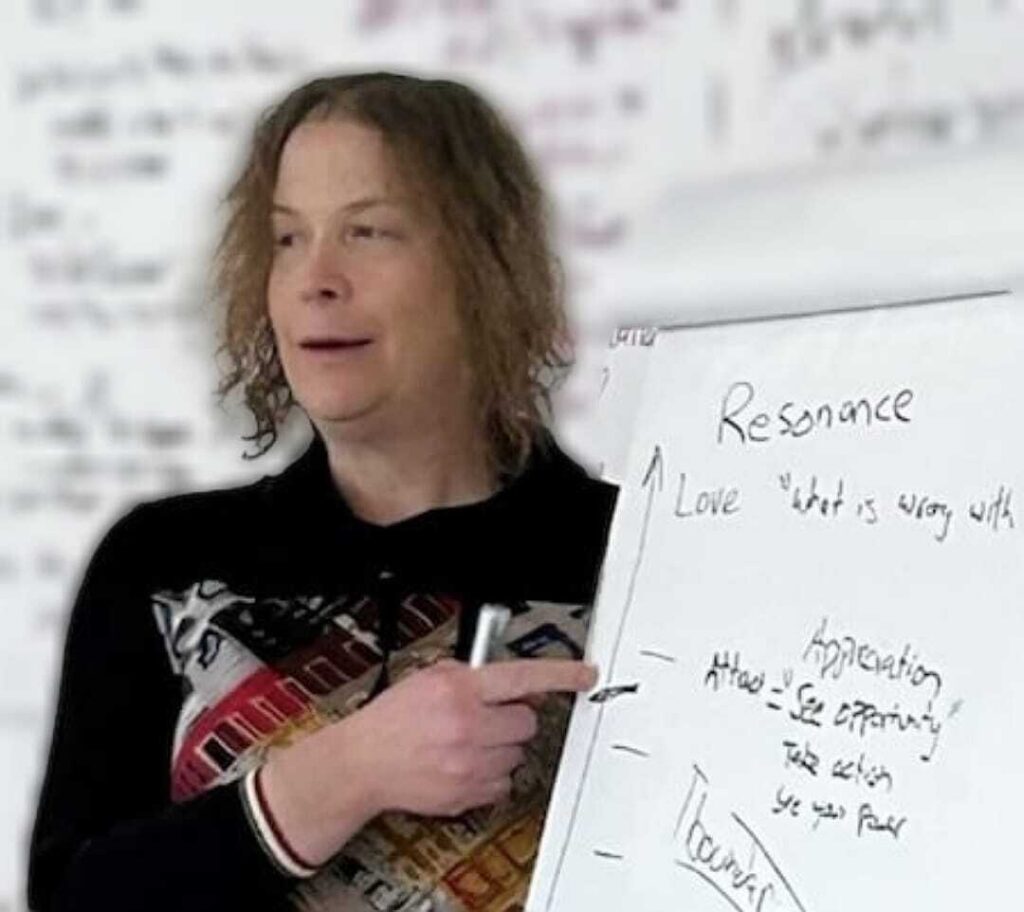
About the Instructor...
Dr. Morgan Giddings
For 16 years, I’ve helped researchers solve the same problem: they can’t get funded because they’re missing the foundation that makes science fundable.
Most researchers skip straight to methods and data without ever developing a clear scientific model—the “what” that determines whether reviewers get excited about your work.
During my career, including my time as a tenured associate professor at UNC Chapel Hill, I secured $23M+ in funding. At SCI•Foundry, I’ve taught hundreds of researchers these same principles.
This workshop teaches the most fundamental piece: how imagination creates the models reviewers want to fund.
Dr. Morgan Giddings is a third-generation scientist, CEO of SCI•Foundry, and has helped hundreds of clients secure major federal research funding in the US, Canada, Europe, Australia, and South America.

Copyright © 2025 Marketing Your Science LLC. All Rights Reserved